
Philippines AP staffing guide
Follow up a supplier credit after goods are returned
Connect the return authorization, physical movement, receipt reversal, supplier acknowledgment, and credit memo before closing a returned-goods exception.
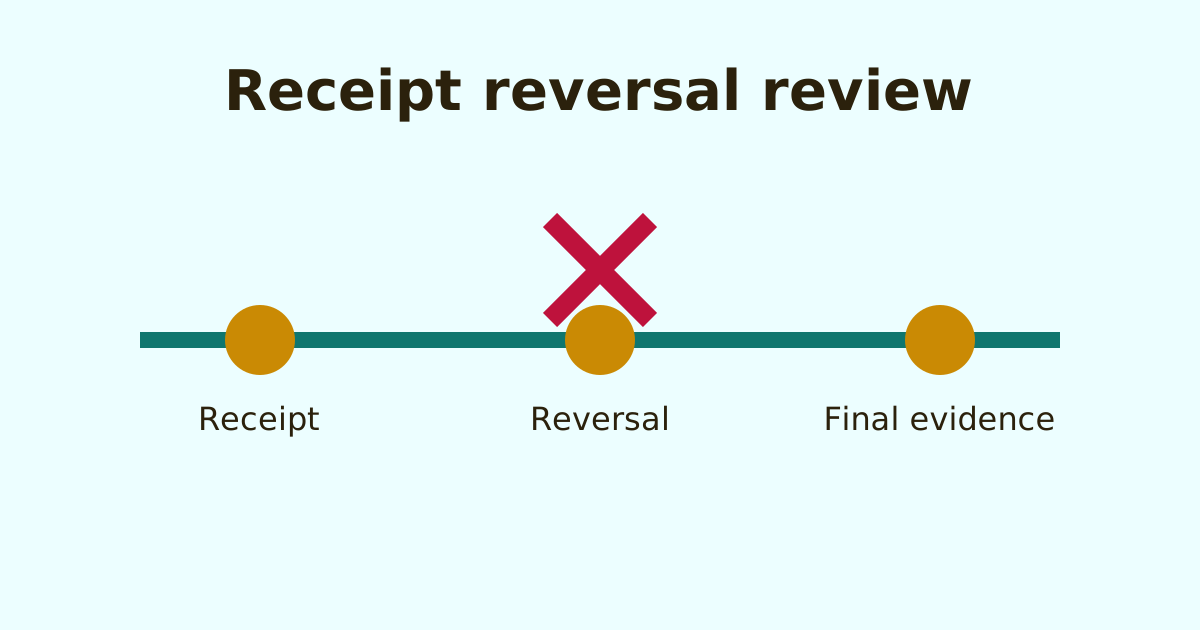
Direct answer
What this role should do
Connect the return authorization, physical movement, receipt reversal, supplier acknowledgment, and credit memo before closing a returned-goods exception. AP support maintains the evidence and aging trail; receiving confirms physical events, purchasing resolves commercial differences, and finance approves accounting treatment.
Define the decision before touching the queue
The operating question is specific: What quantity and value did the supplier accept for credit, and does that result agree with the company’s return and invoice records? Start with the invoice, purchase order, receipt, return authorization, shipping proof, supplier acknowledgment, credit memo, statement, ledger, and correspondence. Keep every source identifier and retrieval time so a reviewer can reproduce the comparison. AP support maintains the evidence and aging trail; receiving confirms physical events, purchasing resolves commercial differences, and finance approves accounting treatment.
Write the lane in plain language: included suppliers and entities, intake source, expected output, stop conditions, authorized reviewer, response target, and retention location. A workable supplier credit after goods return does not ask support to “use judgment” without naming whose judgment is required. It makes missing, conflicting, late, and security-sensitive evidence visible while leaving the source record intact.
Create the return-to-credit chain
Give the case one identifier and link ordered, received, returned, acknowledged, credited, and applied quantities and values. Preserve original document identifiers. Ten damaged units leave the warehouse under RMA-144, but the supplier acknowledges eight. The two-unit difference remains visible instead of being buried in a net credit. For this supplier credit after goods return, The working record needs the evidence, the discrepancy, its financial or operational effect, and the next question. The purchasing or finance owner resolves that question. Do not turn a clean spreadsheet into implied approval or policy.
Make the queue useful to the backup reviewer. The “create the return-to-credit chain” entry should state the next action and who owns it, whether that is evidence collection, correction, review, processing, or closure. Keep corrections linked to the first record. Restrict file and system access to what the task requires, and leave sensitive bank, tax, employee, or identity data in the approved source. Try the step on one ordinary case and one exception before using it as routine.
Distinguish shipment from supplier acceptance
Record carrier collection, tracking, delivery, inspection, and supplier acceptance as different events. Delivery proof alone may not establish the accepted condition or amount. Tracking shows a parcel delivered on September 9, while the supplier’s inspection accepts the return on September 13 with a restocking deduction. For this supplier credit after goods return, The AP specialist records the observation, affected amount or document, missing evidence, and one answerable question. The purchasing or finance owner decides what happens next. A well-organized packet helps that judgment; it does not supply commercial, accounting, tax, security, or payment authority.
For “distinguish shipment from supplier acceptance,” choose a status that names the next action: evidence requested, source conflict, owner review, supplier correction, normal processing, or closure with a reason. A correction should add history, not erase it. Give the specialist only the access needed for preparation, and use source links instead of copying protected data into notes. A normal item and a conflicting item make a useful first test.
Reconcile units and commercial terms
Compare SKU, unit of measure, quantity, unit price, tax, freight, restocking charge, and currency. Route contractual interpretation to the commercial owner. The return is recorded in cases while the credit uses individual units. AP converts using the purchase-order pack size and shows the calculation. For this supplier credit after goods return, The specialist's note should name the source, the factual difference, the value at issue, and the response needed. It then goes to the purchasing or finance owner. Preparation ends where interpretation, approval, master-data authority, or movement of funds begins.
The status for “reconcile units and commercial terms” should tell the next person what must happen. Record whether the case awaits evidence, a supplier correction, owner review, ordinary processing, or documented closure. Retain the original evidence when a new document arrives. Limit permissions, store protected details in their authorized system, and confirm that a second reviewer can follow both a straightforward case and an exception.
Protect against duplicate recovery
Search for replacement shipments, prior credits, invoice deductions, chargebacks, refunds, and open disputes. Multiple teams may pursue the same return through different channels. Purchasing already deducted the value from a later invoice. The credit memo therefore needs reconciliation rather than automatic application. For this supplier credit after goods return, Write down what the records show and what they do not show. Add the affected document or amount and route a single focused question to the purchasing or finance owner. Support can make the case easier to review without taking over the owner's decision.
Avoid a vague “pending” label at this stage. For “protect against duplicate recovery,” name the missing evidence, conflict, reviewer, correction, processing step, or closure reason. Do not overwrite the first result when the supplier or owner responds. Preserve the trail, keep access narrow, and avoid duplicating sensitive fields in a coordination queue. Pilot the status on routine and incomplete records.
Age from meaningful milestones
Track days since supplier receipt, promised credit date, latest response, and next escalation. Do not label a credit overdue against an invented deadline. The supplier promised a memo within 15 business days. The queue uses that commitment and the local holiday calendar instead of simple calendar age. For this supplier credit after goods return, The working record needs the evidence, the discrepancy, its financial or operational effect, and the next question. The purchasing or finance owner resolves that question. Do not turn a clean spreadsheet into implied approval or policy.
Make the queue useful to the backup reviewer. The “age from meaningful milestones” entry should state the next action and who owns it, whether that is evidence collection, correction, review, processing, or closure. Keep corrections linked to the first record. Restrict file and system access to what the task requires, and leave sensitive bank, tax, employee, or identity data in the approved source. Try the step on one ordinary case and one exception before using it as routine.
Verify the final application
Connect the approved credit to the correct supplier, entity, currency, invoice, and period. Retain any residual difference and owner decision. A $4,900 credit is received against a $5,050 return claim. The $150 restocking difference stays open for purchasing review. For this supplier credit after goods return, The AP specialist records the observation, affected amount or document, missing evidence, and one answerable question. The purchasing or finance owner decides what happens next. A well-organized packet helps that judgment; it does not supply commercial, accounting, tax, security, or payment authority.
For “verify the final application,” choose a status that names the next action: evidence requested, source conflict, owner review, supplier correction, normal processing, or closure with a reason. A correction should add history, not erase it. Give the specialist only the access needed for preparation, and use source links instead of copying protected data into notes. A normal item and a conflicting item make a useful first test.
Pilot the workflow and review exceptions
Choose a bounded sample of supplier credit after goods return cases that includes a normal item, incomplete evidence, conflicting sources, an older unresolved item, and a request with a security or authority concern. Ask a backup reviewer to reproduce each result from the packet alone. Revise fields and statuses when the reviewer must rely on private memory, chat history, or assumptions that are absent from the record.
Track measures only after defining their source and purpose. Useful operational signals can include items waiting by reason, age since the last meaningful event, returned packets, correction causes, and owner response time. Volume processed is not proof that liabilities, supplier accounts, or payments are right. Review patterns with the purchasing or finance owner, then assign process changes separately from one-off corrections.
Scope an outsourced handoff
For an outsourced supplier credit after goods return lane, document system access, approved contacts, expected volume, peak timing, source-of-truth fields, evidence storage, quality sampling, backup coverage, and escalation deadlines. Keep vendor-master changes, policy interpretation, invoice approval, accounting treatment, and payment release with named company owners. The specialist prepares a consistent decision packet and follows the recorded next action.
Start with one entity or queue and a short review cycle. The related vendor statement reconciliation service page can help define the preparation work, while the contact and scoping page can turn sources, outputs, permissions, owners, and stop conditions into a role brief. Expand only after routine and exception cases remain traceable from intake through closure.
Continue with vendor statement reconciliation and the contact and scoping page.
Review the packet before handoff
- Authoritative source records and stable identifiers retained
- Amounts, dates, currencies, and assumptions reproduced
- Missing or conflicting evidence stated precisely
- Decision routed to the purchasing or finance owner
- Approval, master-data authority, and payment release remain with the company
Common questions
Accounts payable virtual assistant FAQs
What can outsourced support do in a supplier credit after goods return?
Support can gather the invoice, purchase order, receipt, return authorization, shipping proof, supplier acknowledgment, credit memo, statement, ledger, and correspondence, reproduce comparisons, maintain the exception record, and route a precise question to the purchasing or finance owner.
Which decisions stay with the company?
AP support maintains the evidence and aging trail; receiving confirms physical events, purchasing resolves commercial differences, and finance approves accounting treatment.
How should the workflow begin?
Begin with a bounded sample, named sources and owners, explicit stop conditions, and a review of ordinary and conflicting cases before expanding volume.
Factual checks
Sources
These sources support the tax-form, access-control, and phishing guidance in this article. The planning numbers above are labeled examples and do not come from these sources.
- NIST glossary: least privilegeDefinition supporting limited system access and separation of preparation from approval.
- CISA: Recognize and Report PhishingGovernment guidance supporting independent review of suspicious messages and changed payment instructions.
- IRS: Understanding your Form 1099-KFirst-party example of why gross payment records and business books may need reconciliation; tax decisions remain with authorized specialists.
International Labour Organization guidance on remote work arrangements reinforces why remote role briefs should document expectations, communication rhythms, and accountable handoffs.
Contact Us to turn this article into a scoped Philippines-based staffing brief.